CRM for Small Businesses in Nepal: Do You Actually Need One in 2026?
Ask most small business owners in Nepal if they use a CRM, and you'll usually get a confused look, followed by "no, we're too small for that." CRM sounds like something built for call centers and corporate sales floors a fancy dashboard with pipelines and forecasts that a two-person clothing shop or a home bakery has no real use for.
Here's the honest truth, though: most small businesses in Nepal are already running something like a CRM. It just exists in their heads, scattered across WhatsApp chats, Instagram DM history, and a notebook someone keeps by the register. The question for 2026 isn't really "do I need a CRM" it's "is the informal system I'm already running actually working, or is it quietly costing me sales I don't even notice I'm losing?"
Let's break that down honestly.
What a CRM Actually Is (Without the Corporate Language)
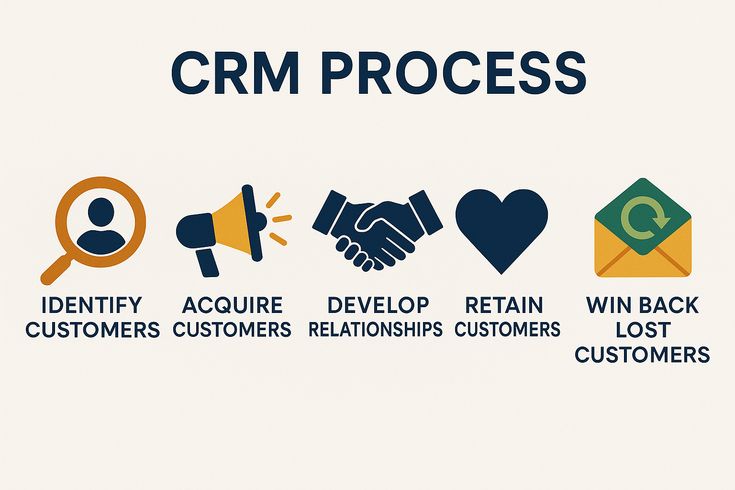
CRM stands for "customer relationship management," which sounds abstract until you strip away the jargon. At its core, a CRM is just a system for keeping track of who your customers are, what they've asked about, what they've bought, and what needs to happen next.
That's genuinely it. A CRM doesn't have to mean forecasting dashboards and sales quotas, for a small business, it can be as simple as knowing which of your last twenty inquiries actually turned into a sale, and which ones you forgot to follow up on.
The corporate version of CRM software got a reputation for being bloated and complicated because it was built for large sales teams with complex approval chains. That reputation is exactly why most small Nepali businesses assume it's not for them, but the underlying idea, tracking customers properly, applies just as much to a one-person business as it does to a hundred-person company.
Signs You're Already Running an Informal CRM (and It's Not Working)
Before deciding whether you need one, it's worth honestly checking whether your current system chat apps and memory, is actually holding up.
You've lost track of who you already replied to. A customer messages again, and you genuinely can't remember if you already sent them a price.
Follow-ups depend entirely on memory. You know you were "supposed to check back" with someone, but by the time you remember, three days have passed and they've likely moved on.
You can't answer basic questions about your own business. How many people inquired this month? How many actually bought? If the honest answer is "I'm not sure," you're not really tracking anything you're guessing.
Team members duplicate or contradict each other. One person quotes a price, another replies to the same customer without knowing, and the customer ends up more confused than convinced.
Repeat customers get treated like strangers. Someone who bought from you three months ago messages again, and there's no record of what they bought or when, so you start the conversation from zero.
If even two or three of these sound familiar, you're not "too small for a CRM." You've actually already outgrown running things purely from memory, you just haven't replaced it with anything yet.
Why 2026 Makes This More Urgent Than It Used To Be
A few things have changed that make this gap harder to ignore. Competition among small businesses online has grown sharply, so customers have more options and less patience for slow or inconsistent replies. Inquiry volume has also grown social commerce means more people messaging directly than ever, which makes memory-based tracking break down faster than it used to. And customer expectations have shifted too; people increasingly expect a business to remember their previous order or conversation, the same way they've gotten used to from bigger platforms.
None of this means you need an enterprise CRM built for a hundred-person sales team. It means the simple version of the idea knowing your customers and staying on top of conversations, matters more in 2026 than it did five years ago.
Why Most Small Businesses Never Actually Get One
If tracking customers properly matters this much, why do so few small businesses in Nepal actually use a CRM? Usually it comes down to three assumptions: it's expensive, it's complicated to set up, and it's built for a sales team you don't have.
All three of those assumptions were fair when they were based on traditional CRM software. They don't really apply anymore and this is exactly where Sociair changes the picture.
How Sociair Gives Small Businesses a CRM That Actually Fits
Sociair isn't a scaled-down version of enterprise CRM software with half the features removed. It's built from the ground up around how small businesses in Nepal actually operate chat-based sales, social media inquiries, and lean teams.
Every Conversation Automatically Becomes a Customer Record
Instead of manually entering customer details into a CRM (which is exactly the kind of extra step that makes most small businesses give up on the idea), Sociair automatically turns messages and comments from Facebook, Instagram, TikTok, and WhatsApp into trackable customer records. There's no separate data-entry step the CRM builds itself from conversations you're already having.
A Simple Pipeline Instead of a Complicated Dashboard
Sociair organizes customers into a visual pipeline new inquiry, quote sent, negotiating, confirmed, completed using a simple kanban-style board. There's no sales-forecasting jargon or complicated setup. You can look at it and immediately understand where every customer actually stands.
Nothing Depends on Memory Anymore
Once a conversation becomes a tracked deal, it doesn't disappear if nobody follows up right away. It just sits visibly in whatever stage it's stuck at, so a forgotten follow-up becomes obvious at a glance, instead of quietly costing you a sale nobody even remembers losing.
Repeat Customers Are Actually Recognizable
Because every customer's conversation and order history stays attached to their profile, a returning customer isn't a stranger anymore. Your team can see what they bought before, what they asked about, and pick the conversation back up with actual context.
Orders and Payments Are Part of the Same Record
This is where Sociair goes further than a basic contact-tracking CRM. A customer's record doesn't stop at "we talked" it connects directly to their order and payment status, so you can see the full picture: what they asked about, what they bought, and whether they've paid, all in one place.
Built for One Person or a Small Team, Not a Sales Department
Perhaps the most important difference: Sociair doesn't assume you have a dedicated sales team managing the CRM. It's built so a single business owner, or a lean team of two or three, can keep this level of organization running without any training or technical background.
So, Do You Actually Need One in 2026?
If your business gets a handful of inquiries a month and you genuinely remember every single one, you might be fine without a formal system for a little longer. But if you're regularly losing track of who you've talked to, forgetting follow-ups, or simply have no real idea how many inquiries turn into actual sales you're already past the point where an informal, memory-based system is working for you.
The good news is that "getting a CRM" doesn't have to mean adopting something complicated or expensive. With a platform like Sociair, it can mean your existing conversations quietly organizing themselves into something you can actually see and manage, without you doing any extra work to set it up.
Final Thoughts
CRM has always sounded like a tool for someone else's business bigger, more corporate, more complicated than what a small Nepali business actually needs. But strip away the jargon, and it's really just about not losing track of your own customers, which matters just as much for a one-person shop as it does for a hundred-person sales floor.
Sociair takes that idea and makes it genuinely usable for small businesses turning conversations you're already having into an organized, visible pipeline, without requiring a sales background, a bigger team, or a complicated setup. If 2026 is the year your inquiries have started outgrowing your memory, that might be exactly the sign that it's time to let Sociair keep track of it for you.